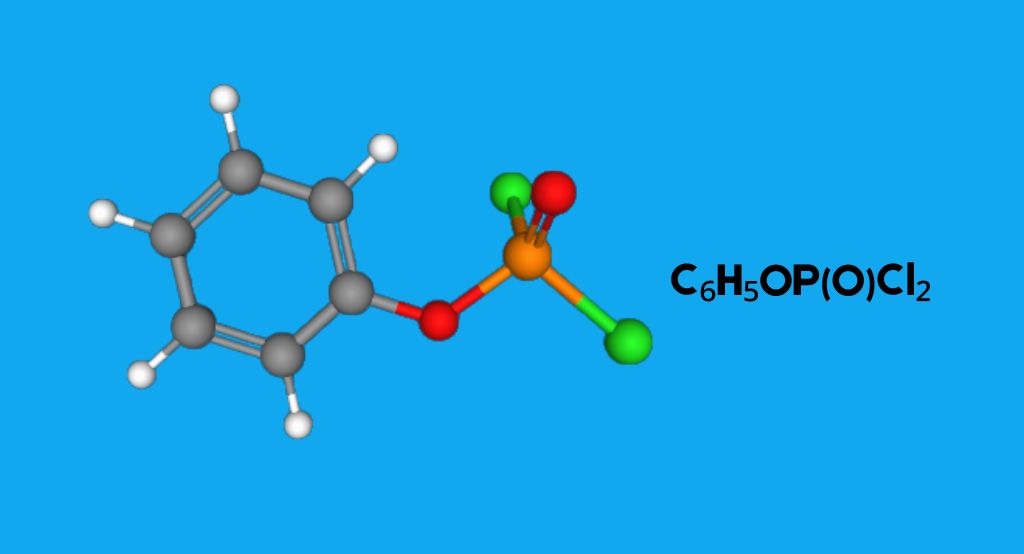
Among specialty chemicals, phenyl dichlorophosphate (PDCP or PDP) is a critical reactive intermediate used in many high-value chemical processes. From flame retardants and plasticizers to pharmaceuticals and agrochemicals, this compound is a silent functional compound responsible for product safety, performance, and durability.
Let’s learn about PDCP, how it works, and why industries use it.
What is Phenyl Dichlrophosphate (PDCP)?
Phenyl dichlorophosphate, also known as PDP, is an organophosphorus compound with the chemical formula C₆H₅OP(O)Cl₂.
It appears as a clear to pale yellow liquid and has a strong, pungent odor. PDCP is primarily used as a chemical intermediate meaning it’s not typically used directly, but it’s essential for producing other key chemicals and additives.
Basic Properties:
- Chemical Formula: C₆H₅OP(O)Cl₂
- Molecular Weight: 210.99 g/mol
- Appearance: Clear to pale yellow liquid
- Boiling Point: Around 220°C
- Solubility: Reacts with water; soluble in organic solvents
How PDCP Works in Chemical Reactions
Phenyl dichlorophosphate is highly reactive due to its phosphoryl and chloride groups, which makes it ideal for producing phosphate esters and phosphorus-based intermediates.
During reactions, PDCP acts as a chlorinating and phosphorylating agent, helping to introduce phosphate functionalities into other molecules a process critical for developing advanced polymers, flame retardants, and stabilizers.
Key Applications of Phenyl Dichlorophosphate
1. Flame Retardant Manufacturing
PDCP is an essential raw material in the production of phosphate ester-based flame retardants. These additives are widely used in:
- Electrical insulation materials
- Furniture foams
- Automotive interiors
- Building materials
By helping reduce flammability, PDCP-derived compounds contribute to fire safety and material durability.
2. Plasticizers and Polymer Additives
PDCP is also used in the manufacture of plasticizers that enhance flexibility and thermal stability in PVC and related polymers.
The resulting products offer improved mechanical strength, clarity, and longevity, making them suitable for wires, cables, and molded components.
3. Agrochemical Intermediates
In agrochemical production, PDCP serves as an intermediate for phosphorus-containing pesticides and insecticides.
Its reactivity helps form stable organophosphorus compounds that ensure controlled release and efficacy in agricultural applications.
4. Pharmaceutical and Specialty Chemicals
PDCP is used in synthesizing active pharmaceutical ingredients (APIs) and specialty intermediates. Its ability to react precisely under controlled conditions allows manufacturers to develop high-purity compounds for medicines and fine chemicals.
5. Coatings, Adhesives, and Sealants
PDCP-derived phosphates also find applications in industrial coatings and adhesive formulations. These improve chemical resistance, bonding strength, and surface protection, particularly in heat- or chemical-exposed environments.
Why Manufacturers Prefer PDCP
- High Reactivity & Versatility: Works effectively as a phosphorylating agent in diverse reactions.
- Purity & Consistency: When produced under controlled conditions, PDCP delivers reliable performance.
- Wide Industrial Use: Serves as a foundation for many modern chemical products.
- Scalable Production: Can be supplied in bulk, meeting both domestic and international industrial demands.
Adishank’s Commitment to Quality
At Adishank, we specialize in the manufacture and supply of high-purity Phenyl dichlorophosphate (PDCP).
Our facilities are equipped with modern technology to ensure consistency, safety, and compliance with international standards.
Adishank PDCP Highlights:
- High assay purity (≥99%)
- Export-grade packaging (200 kg MS Drums / IBC)
- SDS & COA documentation available
- Technical support for custom formulations
By choosing Adishank’s PDCP, you get reliability, precision, and strong technical support ensuring your formulations meet both performance and safety standards.