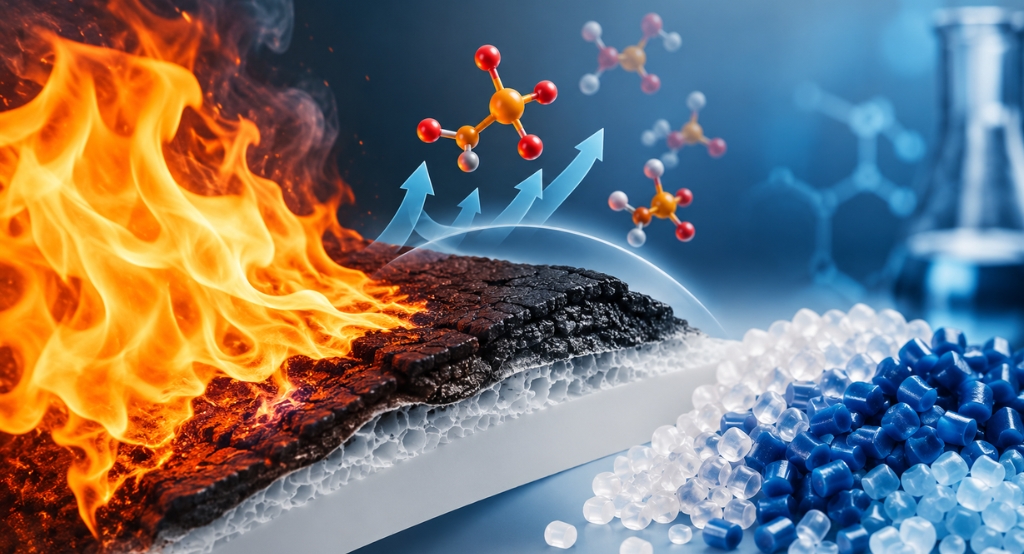
Polymer materials offer excellent strength, flexibility, and processing advantages, but many conventional polymers are inherently combustible. For applications in electronics, construction, transportation, coatings and industrial components, improving polymer fire resistance is therefore an important formulation objective.
Phosphate-based flame retardants are widely studied and used for this purpose because phosphorus-containing compounds can interfere with combustion through both condensed-phase and gas-phase mechanisms.
What Are Phosphate-Based Flame Retardants?
Phosphate-based flame retardants are phosphorus-containing compounds incorporated into polymer formulations to reduce flammability and slow flame propagation. Depending on their chemical structure and the polymer matrix, they can promote protective char formation, reduce combustible volatile release, or interfere with flame chemistry.
Commercial phosphate chemistry includes different molecular structures designed for specific performance requirements. Adishank, a specialty chemicals manufacturer in India, lists products such as Cresyl Diphenyl Phosphate (CDPP) and Tricresyl Phosphate (TCP) within its specialty chemical portfolio for industrial applications.
How Do Phosphate Flame Retardants Improve Fire Resistance?
1. Promote Protective Char Formation
Some phosphorus-based flame retardants generate acidic phosphorus species during thermal decomposition. These can promote dehydration, crosslinking, and charring in suitable polymer systems.
The resulting carbonaceous layer acts as a protective barrier, reducing heat transfer and limiting the release of combustible gases from the polymer.
2. Reduce Flame Propagation
Phosphorus-containing compounds can also participate in gas-phase flame inhibition. Reactive phosphorus species can interfere with combustion reactions involving highly reactive radicals, helping reduce flame intensity.
3. Support Intumescent Protection
In suitable formulations, phosphorus chemistry can contribute to intumescence, where a swollen, carbon-rich protective layer forms on the polymer surface. This barrier can slow heat transfer and restrict the movement of combustible gases.
Why Formulation Selection Matters
The effectiveness of a phosphate-based flame retardant depends on more than its phosphorus content. Polymer type, additive concentration, compatibility, processing temperature, thermal decomposition behaviour and interactions with other additives all influence final performance.
Manufacturers therefore need to evaluate flame retardancy alongside mechanical properties, thermal stability, processing performance and long-term durability. Research also highlights the importance of selecting the appropriate phosphorus chemistry for the specific polymer system rather than treating all phosphorus-based flame retardants as interchangeable.
Applications in Polymer Systems
Phosphorus-based flame-retardant chemistry can be relevant to thermoplastics, thermosets, polyurethane systems, coatings, elastomers, and advanced polymer composites.
For manufacturers and compounders, the right phosphate-based additive can help develop polymer formulations with improved fire performance while maintaining the processing and physical properties required for the end application.
Conclusion
Phosphate-based flame retardants improve polymer fire resistance by influencing combustion in the condensed phase, gas phase, or both. Their ability to promote char formation, reduce combustible decomposition products, and inhibit flame chemistry makes phosphorus chemistry an important tool in modern flame-retardant polymer formulation.
For B2B buyers, selecting the right chemistry should be based on the polymer system, processing conditions, required fire-performance standard, and overall formulation requirements.
FAQs
1. What are phosphate-based flame retardants?
Phosphate-based flame retardants are phosphorus-containing chemicals used in polymer formulations to reduce flammability and slow flame propagation through condensed-phase, gas-phase or combined mechanisms.
2. How do phosphate flame retardants work in polymers?
They can promote protective char formation, reduce the release of combustible volatiles, and interfere with combustion reactions, depending on their chemical structure and polymer compatibility.
3. Are phosphate-based flame retardants suitable for all polymers?
No. Their effectiveness depends on the polymer chemistry, processing conditions, additive loading, and interactions with other formulation components. Compatibility testing is important before commercial use.
4. What phosphate-based products does Adishank offer?
Adishank’s specialty chemical portfolio includes Cresyl Diphenyl Phosphate (CDPP) and Tricresyl Phosphate (TCP), along with several phosphite-based products used across industrial applications.
5. What should manufacturers consider when selecting a flame retardant?
Key factors include required fire performance, polymer compatibility, processing temperature, additive loading, mechanical properties, thermal stability, regulatory requirements, and total formulation cost.